Understanding Neck Strain

Neck strain hurts muscles and tendons in your neck. It causes pain and makes it hard to move.
A sprain hurts ligaments (tough bands in joints). A strain hurts muscles and tendons (ropes that link muscle to bone).
This injury happens when muscles work too hard. They stretch too far or stay in odd positions.
Poor posture at a desk can cause it. So can sleeping in a bad position. Sudden moves like whiplash also hurt.
Most people feel dull or sharp pain. Their neck gets stiff. Turning their head is hard.
The pain gets worse with movement. Long phone or computer use makes it hurt more.
Neck strain is usually not serious. But it can make daily tasks hard. Driving or sleeping may feel tough.
Pain may spread to shoulders or upper back. That makes it harder to feel better.
Knowing the cause helps you manage it.
How Neck Strain Works?
Neck strain happens when muscles or tendons stretch too far. Tendons are tough tissues.
They connect muscles to bones. When they stretch or tear, they get sore and swollen.
Swelling sends pain signals to your brain. Your brain feels discomfort or stiffness.
Your body tightens muscles to protect the hurt spot. This can make stiffness worse.
Bad posture causes neck strain. Slouching or craning your neck forward hurts.
Sudden moves in car accidents or sports can strain muscles. They stretch too fast.
Carrying a heavy bag on one shoulder can cause it. Sleeping without neck support also hurts.
Doing the same thing over and over weakens neck muscles. This makes injury more likely.
A doctor checks your symptoms. They ask about recent activities or injuries.
They look at how far you can move your neck. They check for sore spots and muscle strength.
Sometimes they use X-rays or MRI scans (pictures inside your body). These rule out other problems.
Other problems include herniated discs (bulging cushions between bones) or breaks.
Treatment focuses on easing pain. It reduces swelling and helps you move normally again.
Why Neck Strain Matters?
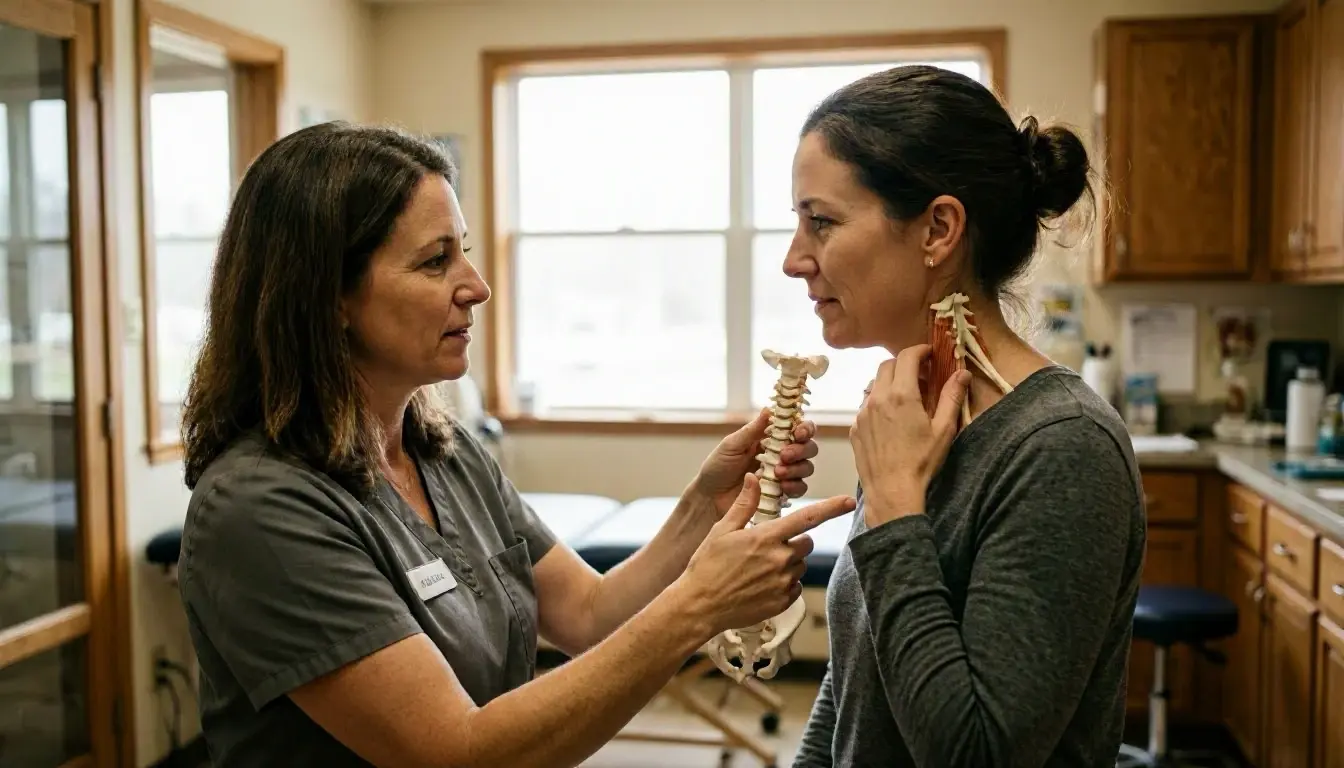
Neck strain matters because it makes daily life hard. Simple tasks like driving hurt.
Pain and stiffness limit how much you can move. Turning your head is tough.
This can cause headaches or shoulder pain. Numbness in arms may happen if nerves are hurt.
Fixing neck strain early stops long-term pain. It lowers the chance of more injury.
Neck strain also affects your mind. Pain can cause stress and frustration.
It makes it hard to focus. This is worse for people who work at desks.
Athletes may play worse. Their recovery slows down.
Knowing how to prevent neck strain helps. You can stay active and pain-free.
When Neck Strain Matters Most?
Neck strain is important when it affects safety. Drivers may not check blind spots well.
They can't react fast to dangers. This raises accident risk.
Office workers may get worse pain over time. It makes work harder to do.
Athletes or laborers may get hurt more. Their performance drops.
Some jobs cause neck strain more often. Healthcare workers lift and bend a lot.
Construction workers and drivers hold odd positions. They get strain from this.
Students and remote workers look at screens for hours. Bad setup can hurt their necks.
Knowing when strain happens helps. You can adjust your workspace or take breaks.
Stretching can help too.
See a doctor if pain won't go away. Numbness or weakness in arms is serious.
These may mean a pinched nerve (squeezed nerve). They could mean a herniated disc.
People in Hendersonville, TN should know when to get help. This stops long-term problems.
It helps you heal faster.