Glossary

What is Magnetic Resonance Imaging?

Magnetic Resonance Imaging is a non-invasive medical test that uses a strong magnetic field, radio waves. And a computer to produce detailed pictures of the body’s internal structures, especially soft tissues like muscles, ligaments. And spinal discs. Unlike X-rays, MRI does not use radiation, making it safer for repeated use. It helps doctors diagnose injuries, diseases. And abnormalities with high accuracy.

Reviewed by Advanced Injury Care ClinicSources reviewed: U.S. Food and Drug Administration (FDA), American College of Radiology (ACR)

Quick Facts About Magnetic Resonance Imaging

Category

Medical imaging technology

Used for

Diagnosing soft tissue injuries, spinal issues. And internal abnormalities

Common confusion

Often mistaken for X-rays or CT scans, which use radiation

Also called

MRI, MR Imaging

Key Takeaways About Magnetic Resonance Imaging

Understanding Magnetic Resonance Imaging

Magnetic Resonance Imaging in Chiropractor: Magnetic Resonance Imaging is a non-invasive medical test that uses a strong—v...

MRI is a tool used in medicine. It lets doctors see inside the body. They don’t need surgery to do this.

Related glossary terms: Disc Herniation, Spinal Stenosis, Pinched Nerve.

MRI uses a strong magnet and radio waves. It makes clear pictures of organs and muscles. It also shows ligaments and other soft parts.

MRI is safer than X-rays or CT scans. It doesn’t use radiation. This is good for people who need many tests.

How Magnetic Resonance Imaging Works?

MRI is great for hard-to-see body parts. It shows the brain, spine. And joints well. It also shows organs inside the body.

Doctors use MRI to find problems. It can spot herniated discs or torn ligaments. It can also find tumors or strokes.

The pictures are very clear. This helps doctors see issues. Other tests might miss these problems.

An MRI machine looks like a big tube. A table slides in and out. The patient lies on this table.

The machine makes a magnetic field. This field goes around the patient. It makes hydrogen atoms in the body line up.

Radio waves then go through the body. This makes the atoms move. When they go back, they send out energy.

The machine catches this energy. It turns it into pictures. These pictures show inside the body.

The test doesn’t hurt. But you must lie still for 30 to 60 minutes. Moving can make the pictures blurry.

Some people feel scared in the tube. Open MRI machines can help. They are not as closed in.

The machine makes loud knocking sounds. Patients get earplugs or headphones. This helps block the noise.

Sometimes, a dye is used. It makes some body parts show up better. The dye is put in with a shot.

Why Magnetic Resonance Imaging Matters?
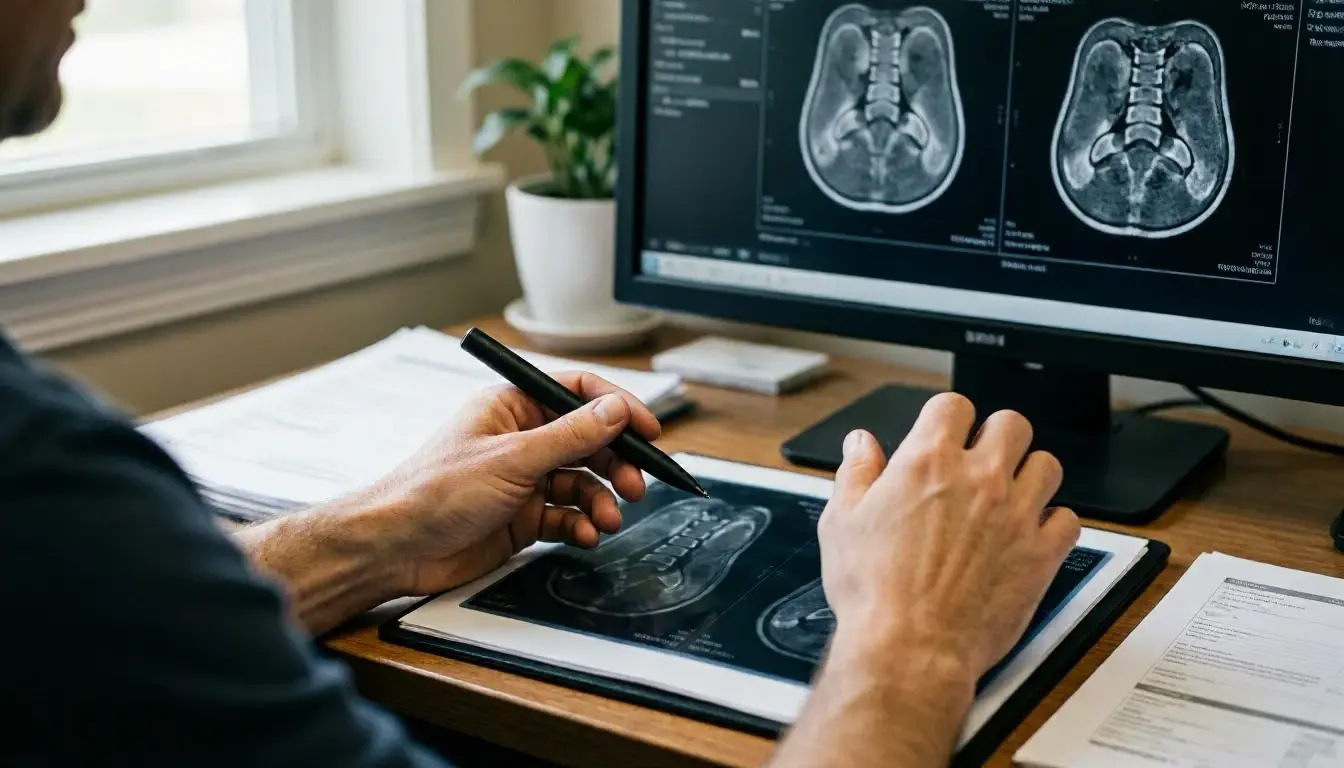
How Magnetic Resonance Imaging applies to Chiropractor services in Hendersonville, United States—practical illustration

MRI is very important in medicine. It shows things other tests can’t. It gives details about soft parts.

X-rays show bones well. But they don’t show muscles or ligaments. CT scans show some soft parts but use radiation.

MRI fills this gap. It shows soft parts clearly. It doesn’t use radiation.

This makes MRI great for many uses. It helps find injuries. It checks long-term illnesses. It helps plan treatments.

MRI can find problems X-rays miss. A herniated disc won’t show on an X-ray. But MRI will show it clearly.

This helps doctors choose the right treatment. They might pick therapy, medicine. Or surgery. MRI helps them decide.

MRI also tracks treatments. It can show if a tumor is shrinking. It can check if a torn ligament is healing.

When Magnetic Resonance Imaging Matters Most?

Doctors often order MRI for soft tissue problems. They use it for joint or nerve issues. It helps with back or neck pain.

MRI can check headaches. It looks at numbness or weakness. It can also check lumps found in exams.

Sometimes, MRI is used before surgery. It gives doctors a clear picture. This helps them plan better.

MRI is great for athletes. It finds muscle tears or sprains. X-rays might miss these injuries.

MRI helps doctors make a treatment plan. It gets patients back to activities fast. It also keeps them safe.

MRI tracks long-term illnesses. It checks conditions like arthritis. It sees changes in joints over time.


How to Evaluate Magnetic Resonance Imaging?

Related Concepts Compared

Magnetic Resonance Imaging vs. X-ray

X-rays use radiation to create images of bones and some dense tissues. While MRI uses magnets and radio waves to show soft tissues like muscles and ligaments.

Magnetic Resonance Imaging vs. CT Scan

CT scans use radiation to create cross-sectional images of the body, offering faster results but less detail for soft tissues compared to MRI.

Magnetic Resonance Imaging vs. Ultrasound

Ultrasound uses sound waves to create real-time images, often used for pregnancies or joint issues. But lacks the detail of MRI for deep tissues.

Expert Note

MRI is highly sensitive for detecting soft tissue injuries. But the quality of the scan depends on patient cooperation. Even slight movements can blur images. So clear communication about staying still is key to accurate results.

Common Mistakes or Myths About Magnetic Resonance Imaging

  • Assuming MRI uses radiation like X-rays or CT scans.
  • Believing MRI is only for brain scans—it’s also used for joints, muscles. And internal organs.
  • Thinking MRI is painful—it’s painless but may cause discomfort from lying still.
  • Not removing metal objects before the scan, which can be dangerous in the magnetic field.
  • Expecting instant results—MRI images must be interpreted by a radiologist, which takes time.

Magnetic Resonance Imaging in Practice: A Real-World Example

A runner visits a clinic in Hendersonville, TN, complaining of persistent knee pain after a marathon. An X-ray shows no fractures. But an MRI reveals a torn meniscus. The detailed images help the doctor recommend physical therapy and, later, track the healing progress without surgery.

Sources & Further Reading on Magnetic Resonance Imaging

Related Terms

Disc Herniation

Disc herniation is a spinal condition where the soft, gel-like center of a spinal disc pushes through a tear in the tougher outer layer. This can irritate nearby nerves, causing pain, numbness. Or weakness in the back, arms. Or legs. Disc herniation often occurs in the lower back or neck and is commonly linked to aging, injury. Or improper lifting.

Spinal Stenosis

Spinal Stenosis is a narrowing of the spaces within the spine, which can put pressure on the nerves that travel through it. This condition most commonly occurs in the lower back and neck and often develops gradually due to aging, arthritis. Or wear-and-tear changes in the spine. Symptoms may include pain, numbness, muscle weakness. And difficulty walking or standing for long periods.

Pinched Nerve

Pinched Nerve is a condition where surrounding tissues, such as bones, cartilage, muscles. Or tendons, press too tightly against a nerve. This pressure disrupts the nerve’s function, causing pain, tingling, numbness. Or weakness in the affected area. Pinched nerves often occur in the spine, wrists. Or elbows and can result from injury, poor posture. Or repetitive motions.

Soft Tissue Therapy

Soft Tissue Therapy is a hands-on treatment that targets muscles, tendons, ligaments. And fascia to reduce pain, improve mobility. And speed recovery from injuries. Soft Tissue Therapy techniques include massage, stretching. And pressure to break up scar tissue, ease tension.

Physical Rehabilitation

Physical Rehabilitation is a medically supervised process that helps individuals regain movement, strength. And function after injury, surgery. Or illness. Physical Rehabilitation uses exercises, stretches, manual therapy. And education to reduce pain, restore mobility. And prevent future problems. It's tailored to each person’s condition and goals, often involving a team of healthcare providers.

Advanced Injury Care Clinic

Have Questions About Magnetic Resonance Imaging?

Contact Advanced Injury Care Clinic for practical guidance on Magnetic Resonance Imaging and related chiropractor work in Hendersonville.

+1 615-777-0624